Capacity vs Capacity GAP
The AU 2026 Keynote asks: What if every person, team, and project had more capacity to deliver?
I look forward to seeing how high new tools and techniques raise that theoretical capacity ceiling.
It's good to know where that ceiling is. It's good to know where the industry leading benchmarks are.
It's critical to know where you are relative to recognized Best Practices.
It's critical to understand the gap - and to know how to bridge it.
But here's the secret: you may upgrade capacity by upgrading software. But you maximize your value by upgrading behavior, by consistently closing the CAPACITY GAP.
The biggest catalyst in upgrading ability to meet your capacity is upgrading how fast, how well, and how systematically you upgrade your behavior.
Modernize your behavior. Upgrade how well you use your systems and tools.
Improve how you Train. How you Learn. How you Share.
You already have the technology you need. You just need to learn how to use it.
- Details
- Parent Category: Leadership
- Category: Training
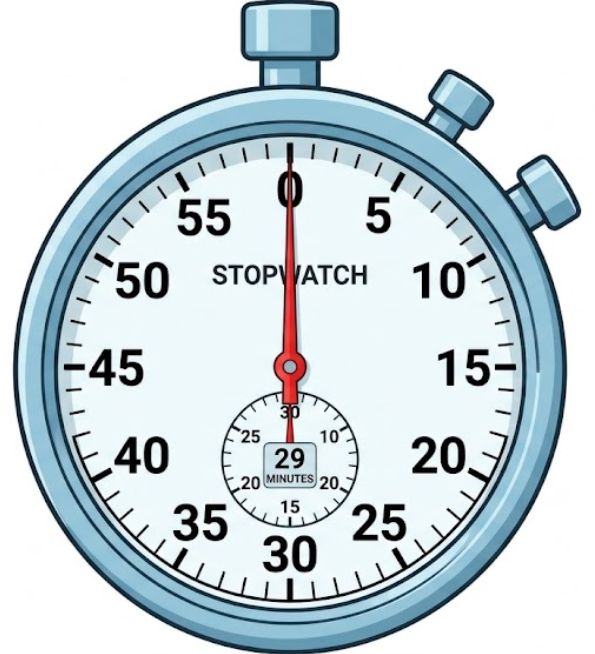
29-minutes to Easy Street
Two-hours is better, but that's still Too Big
|
I was Bentley's Civil Training Content Lead when we transformed our training from the "Multi-day Instructor-led" model to the "Modular self-training" model. "It's not about how we want to teach. It's about how they want to learn." Two-hour blocks was a giant leap forward then, but it's too big an ask nowadays. That's not how they want or are able to learn (due to time and budget constraints). (I'll talk Bentley specifics here, but the issues span the industry.) |
 |
It's time for the Next Leap Forward: Billable (micro)learning.
Let's make the goal measurable: 29-minutes from need to mastery.
If you spend less than half-an-hour making the remaining 7.5 hours of your day dramatically more productive, that should be billable, yes? We often spend more than 30 minutes reviewing client standards and specifications - and billing for that.
29-minutes or less solves the two major roadblocks to training: availability and cost.
To be clear, your total learning time won't be reduced by orders of magnitude. There is a lot of fat and bloat that can be trimmed off, reducing training total training time by maybe 30%. But learning just what you need just when you need it is better learning: direct application solves the need immediately - no need to have to retain the lesson for months. In Training Industry Best Practice lingo: "Just Enough, Just In Time."
Note: "Microlearning" is actually a better term: "micro" implies a constraint. "Just Enough" is an optimization goal for which it is too easy to say "three days is 'Just Enough.'" Microlearning compels thinking "as short as possible".
There's work involved...
The content needs to be parsed down from the 2-hour default. There is some work required here.
Bentley designed a lot of their training to fill a two-hour block. Why? To fill a conference workshop session and make in-person training agendas easier to bundle. That constraint of scheduling convenience overrode the "Just Enough" training industry paradigm.
Better Training Practices
Beyond the "Two Hour" block, there are some other training design suboptimizations and inconsistencies. If you're going to atomize the existing content for easier consumability, be aware of the opportunities:
- OpenRoads training is not consistently "sub-scoped". Exercise 3 typically requires you to work through Exercise 1 and 2.
- Setting up "Exercise Datasets" (or "Jumpaheads") are the quickest way to atomize the multi-hour courses into smaller chunks.
- Courses often start "from scratch," with Exercise 1 often creating new files from seed and attaching references.
- Basically, the first ten minutes of a course is overhead for something you already know how to do
- Ironically they don't have a standalone short course on best practices on how to set up a project
- Basically, the first ten minutes of a course is overhead for something you already know how to do
- the target audience is almost always a single monolith: designers, with little consideration for consumers
- there are more consumers than designers and 100% of the "consumer skills" are valuable for designers
- a little data cleanup opens up the content to a much broader audience
- a good portion of those consumer "evaluation skills" are critical in ensuring the accuracy of in-process design.
- there are more consumers than designers and 100% of the "consumer skills" are valuable for designers
- Sometimes the "shiny new tool" is emphasized over more fundamental tools. More of a marketing/sales intent than good training design.
- "Training Design" is often simply linear "Process Documentation" for a single learner role - the process an experienced sole designer would take on a typical project - it's not "designed" training.
- The most egregious example of this was "Generating Reports" was deferred to Chapter 10 of 13, because reports are required as deliverables after the design is complete. A manager wanting to learn to generate a report would have to sit through eight chapters of content they will never use.
- "Single Pass" training mentality (related to "Documenting the Guru's Workflow" habit).
- My favorite examples are with Laying Out Drainage Structures: there are over a dozen things that have to go right in placing an inlet. The last thing you want to do is throw in all the bells and whistles (like Civil AccuDraw) and have any expectation that any of the students will nail it. If you do not immediately provide troubleshooting instructions, you will have derailed 99% of self-learners.
- Have multiple passes for very complicated workflows. Iterated "Incremented complexity" boosts self-learning success
- Best practice is to start with a sandbox. Give the learner space to play around, troubleshoot and iterate.
- The good news is that "sandbox examples" are very easy to add.
Actions
Catalog your target content. You can feed the course PDFs into AI to get an idea of which Exercises are "Ready to Train" and which are continuations of previous chapters (no "Start Here" dataset).
Build Exercise Starter Datasets. Someone will have to work through the courses, saving milestones. "Beginners" can work through this and save the files. This can be crowdsourced.
Fix the low-hanging Inconsistencies and Slop. This is where experience in the software and training design matters. Sometimes something is made unnecessarily complex, or a new tool is a better solution. Sometimes the payoff isn't worth the time investment. Sometimes there is some time-consuming, completely out-of-scope workflows thrown in for no justifiable reason. Sometimes a lot of time can be saved with a little cleanup.
Get the content to the learners (see below).
There's a (centralized) Consequence...
You always need to manage your content (Curation - the Overlooked Enabler). As your content gets more granular, there's more to manage. More granular means more specialized, meaning more varied target audiences. More to manage, more to curate.
The curation investment return is at-scale benefit to your production/billable staff.
Making the smaller training chunks findable (pull) and assignable (push) requires a robust LMS
- You need a successful "Pull" LMS, where learners can find the most appropriate content quickly.
- You can see that current repositories/servers bury you with noise to flex their "quantity".
- More content forces the need for better content management
- Well-tagged data still needs to work with the interface. "AI agents" still lack the expertise between the training audience roles and most appropriate content.
- More courses means more learning paths to recommend and track - that's an additional LMS challenge and Curator challenge.
Don't Forget Force
To ensure compliance, you absolutely need a assignment and tracking system. The ability to force compliance. Consider your HR-mandated training: 0% interest, 100% compliance.
We talk a bit about LMSs in Curation - the Overlooked Enabler
- Details
- Category: Leadership
Training: Use the Force
|
How do you meet your competency/capacity goals? How do you meet your training goals? Use Force. You have to. Make the training as applicable and consumable as possible - and then force it. |
 |
It is a HUGE ask to get 12 students and an instructor together for a three or four day training session. Even with no travel and no training costs, managers see almost 400 hours and over $75000 unbilled.
Assuming the time and money is committed, what about scheduling? "Deadline in danger of not being met" is a continuous training bumper.
Consumable (a few hours) self-training is available - it has been for over a decade. And, yet, it is not consumed. Why?
It's hard to identify the appropriate training (the signal to noise ratio is very small).
No Deadline gets bumped by any Deadline.
So: assign a deadline and track compliance.
Consider required HR videos. What is the compliance on those? 100% Why? Because you a get a bunch of emails until you boss gets involved. You comply. You're forced to.
Do the same with your Engineering training.
If you use Bentley, you have learning.bentley.com. It has adminstrative and reporting capabilities.
Third party Learning Management Systems (LMS) such as Pinnacle by Eagle Point host content (including your custom content) have sophisticated adminstrative functions for your to design curricula, assign courses and learning plans and ensure compliance.
Just like Quality: don't leave Training to chance. Ensure it.
- Details
- Parent Category: Leadership
- Category: Training
Platforms - your Excellence Enablers
Without platforms, all you get is wet.

"All our metrics showing that we're doing pretty good." But how good are your metrics - not against past standards, but leading-edge standards?
We are limited far less by the limits of our tools than by the limits of our understanding of our tools.
And platforms are the most empowering, most complex and least optimized tier of tools.
Platform Mastery
Our platforms are designed to support today’s best practices and tomorrow’s. But many remain entrenched in Yesterday’s practices and mindsets.
Why?
- Complexity. Complexity is always an adoption, optimization and quality challenge.
- Heads-downness? The sheer grind of meeting deadlines (perhaps worsened by using yesterday’s practices). "We're too busy to be better!"
- Periphery. We tend to learn from our required core outward. We are most brilliant and efficient in our core. Our performance and compensation tends to be weighted towards the core. "Speeding the core" is the obvious focus. The periphery is fuzzy.
- The unknown. Engineers enjoy learning, but direct, clear, and full-applicable learning (on the job, we're driven by direct utility). An unguided labyrinth kills the perceived ROI. Nobody, particularly engineers, likes a dead end.
- Integration. A lot of the improvements to workflows occur at the periphery, the handoffs, the interstices (or chasms) between Expertise Silos.
- Training and Learning Resources for peripheral and integrated solutions tend to be sparse and less directly applicable. Way too much interpretation outside our expertise.
In our manual transmission Porsche 911 (993), we're using only a foot and never our right hand. First gear is actually pretty fast if you don't know any better.
The spatial Data Environments are converging to greater Commonality (yay!). The data platforms (.dgn, .dwg) are fairly mature, with extensive capabilities built in to a familiar interface.
The ongoing Digital Integration Revolution aims for a "platform-less" consumability. Consumers and Collaborators(!) need only a web browser - a transformative goal, an actual revolution.
But the platforms that enable and manage "platform-less" are heavy.
Decades ago ProjectWise was for the long-haulers, the heavyweights - DOTs, MegaCorps. Today it's for everyone with a large project. And while today ProjectWise in primarily used as a file collaboration server - everyone with the same software and workspace - tomorrow's collaboration will be widely heterogeneous. Bentley Infrastructure Cloud and Autodesk Construction Clouds are the platforms designed to support ultra-wide consumability and heterogeneous participation.
How do we move our platform expertise from little things today to Big Things Tomorrow (today).
To get to the big things, you need:
- content expertise (the work, the client...)
- platform expertise
- integration expertise
- a business framework for adoption decisions (business opportunities, cost sharing strategies, how much investment with/without immediate return...)
- a framework for technical infrastructure implementation (costs, schedules, risk; infrastructure requirements)
- a framework for technical and workflow adoption by staff/client/project (training, support)
- criteria for project implementation (go/no-go)
Well-designed, future-ready platforms are our great enablers. They're here today. They're inescapable.
You can take advantage of their higher gears or you can continue to redline it in first.
It's a choice (and then a commitment (and then victory laps!).
- Details
- Parent Category: Leadership
- Category: Leadership-Organizational
Oklahoma DOT - MicroStation & InRoads Migration
Project: MicroStation/InRoads Comprehensive Migration from MicroStation/J
Client: Oklahoma DOT (ODOT)
Prime Contractor: Bohannan Huston, Inc. (BHI)
Primary Collaborators: Janet Griffen (ODOT) and Brad Adams (BHI)
Work Scope: Precursory Education, Needs Assessment, Standards Development ("integers to names"), Software Setup
2002-2003
- Details
- Parent Category: Experience
- Category: Projects
The Bigs - Arguments for Fixing
Win More Work!
In the corporate race, we either grow or we die. So, business development is Job #1.
How do we do that? Differentiate from the competition. Deliver better. Focus on and invest in growth sectors.
In Transportation Design growth areas include: BIM/Digital Delivery, Digital Twins, The Full Digital Pipeline.
How do I help businesses win work?
I get them good at the project design and delivery infrastructure today. And help get them ready for tomorrow.
Customer service starts with the relationships, but then it's the deliverables. Do you give clients what they want? More than they want? Are you a Trusted Partner?
The design infrastructure comes in two platforms: AutoDesk and Bentley. That's it. You need to be very good at the platform your client demands. Better than your competitors.
Your Design Platform: How Good Are You?
The tools are set. They're not going away.
(60 seconds)
Are you going to really good early or sort of good later? Lead or follow?. Leadership earns more contracts!
Getting Good Costs the Same Early or Late. Why Wait?
Getting good costs the same whether you get good early or get good late. Why wait?
(36 seconds)
Business as Usual? These are HEAVY Platforms
OpenRoads is a heavy platform. It is layered. It's full of surprises. It's built for integration and live-updates - NOT for simplicity and speed.
OpenRoads Drainage is the heaviest design technical stack I've seen in 35+ years, and it's not even close.
It is not business as usual. Implementation and adoption is not business as usual.
(38 seconds)
Can you Adopt a Fat Platform on a Lean Project?
What does it take to get Competent? What does it take to get Good? How do you not blow up Project Budgets?
How much and when?
(62 seconds)
You want to be strategic about how you implement.
You may not fully build out your plan, but you definitely need to plan out your plan.
How much work do you have now/soon? How much more do you expect to win? How critical is this client? Is the platform broad? If you're asking if you should learn OpenRoads if your clients are largely DOTs, that's an easy answer: Yes! A more nuanced question is "when should I prepare to adopt OpenRoads Drainage when it's not explicitly required yet?"
I help organizations get really good with the platform.
Fix Your Macros!
You can fix your Micros, but you absolutely need to evaluate your Macros - your Big Systems, your BIg Multipliers.
I've seen money spent on fixing little things, when Big Multipliers are grossly neglected.
- The micro might be teaching formal classes or developing effective self-study training courses (lean!).
- The macro is XLr8ing your implementation, adoption, and expertise-sharing systems - in scalable and, ultimately, self-sustaining systems
(73 seconds)
What are your biggest Macros? Your Biggest Multipliers?
- Communications (manageable and harvestable expertise-sharing systems (peer-to-peer and expert-to-expert))
- Your internal Learning and expertise-sharing Systems
How: enhance your default standard (Sharepoint, most likely) or build an integrated custom (it's not particularly expensive or difficult)
(150 important seconds)
Do you want to do Slow Over and Over or Awesome Over and Over?
A final argument (final on this page anyway): what we do, we do over and over and and over and over...
Only by sharing your expertise broadly and quickly will you ensure that you are working Awesomely.
(110 seconds)
What I've done: What I've Done
Quick Links: YouTube Channel JeffMartinPE | My Resume | About this web
- Details
- Category: XLr8
Be Better - Faster!
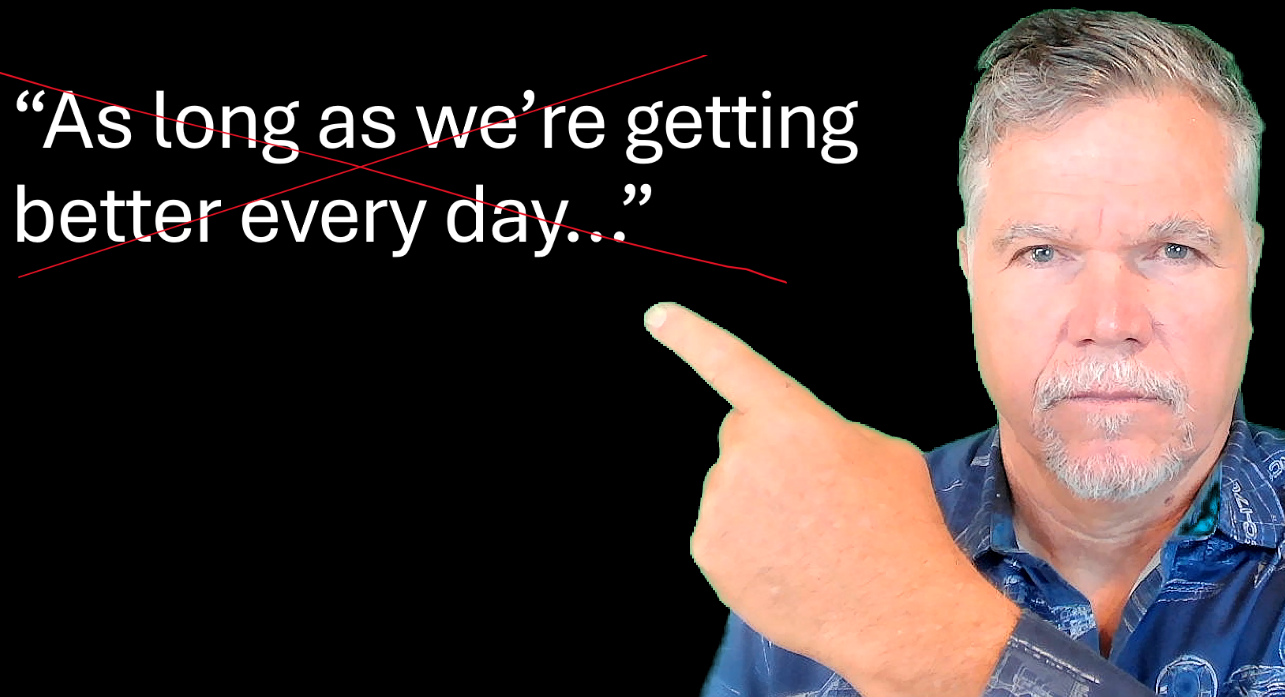
"Better every day" is NOT good enough:
You have to be getting better - FASTER than your competitors!
It's easy.
Start with the Decision to be better faster.
Learn better practices.
Choose the best fits.
Promote an expertise-sharing culture.
Provide the systems and tools to maximize your effort.
- You likely already have capable platforms (underutilized but in place)
Find out how to be better faster: Contact: Jeff Martin, PE
(picture for web preview)
- Details
- Category: Leadership
The Fierce Urgency of Now
My Career Drivers
Innate
Love of Learning
Knowledge is Power. There is Safety in Power.
There is also comfort in that the world is orderly and that the orderliness can be known.
And the whole thing is grandly wonderous.
Compulsion to Serve
There's always been a need to be of service, of value.
Career
Utility/Application
Career is about application. What can you do for somebody?
What knowledge can you convert to valuable action?
Learn while you do (recursive). Apply!
Impact
Scale your effort.
- Details
- Parent Category: Experience
- Category: self
Driven to Drive Innovation
Our past shapes us all.
I grew up with my dad running his own General Construction Company (I also grew up with my brother and I as his ever-available full-gamut laborers).
Homes, subdivisions, office parks.
Recessions. Retreats. Rebuilds.
Decades-long high-impact high-stakes entrepreneurship.
A family business. A business family.
Nature and Nurture.
Civil Engineering was an logical extension of my upbringing.
My first job was for a for three-person Survey and Engineering Design office (The Owner/Principal Engineer, an Engineer four years my senior, and me). We did it all, from Topo Surveys to running the design plans down to the airport for the contractor. Effort with clear direct impact.
As the economy was shrinking, we even got on the phone cold-calling developers.
Founding my own business was inevitable. Nature/Nurture.
- Details
- Parent Category: Experience
- Category: self
Drainage Engineering
I had a consulting manager at Bentley say to me once, "I had no idea that you knew roadway." I KNOW Roadway really well, but when I'm pulled from my Bentley "day job" to provide consulting services, it's for drainage "hot projects" or to consult with leadership teams to plan OpenRoads Drainage Implementations.
I think I defensively answered "I'm roadway first" (because Bentley Civil is roadway first), but upon reflection I'm not sure that holds up to scrutiny. In the three-way split between Roadway, Site, and Drainage Engineering, Drainage does, in fact, get the edge.
I may be the same sized Big Fish, but the Pond of Drainage Experts is much smaller than the Great Lake of Roadway Experts.
OpenRoads Drainage (currently called "Drainage and Utlities") is a full implementation of StormCAD and CivilStorm within the OpenRoads Designer environment. I've been deeply involved in its development and rollout since its early days at Bentley. The Product Manager and I developed most of the training (until recently when I moved to promoting all Engineering Applications).
After getting a full complement of Drainage Training published, I started with Virginia DOT extensively. I developed additional training material per their needs and delivered multiple weeks of training at their headquarters and regional offices. I worked with hydraulic managers to address their concerns (they were less about the software than being able to assure the quality of projects submitted by staff and consultants. StormCAD and CivilStorm are considerably more sophisticated than the software they were replacing. We worked to develop customizations of in-software tools to help flag issues and automate review).
I most recently spent weeks with the Hydraulic Leads at ALDOT, TxDOT, OrDOT, and WSDOT, and a top 5 Design Company going over details of the product's spatial and hydraulic capabilities and how to meet their detailed design criteria (see The Surprise Barrier to OpenRoads Drainage Acceptance).
The last drainage course I authored prior to my current position was Placing a Ditch and Culvert Networks. A direct result of writing that course is a series of enhancements to the software to allow easy layout of ditches whether the terrain reflects the ditch or not. This is an example of where the code was sufficient for "standalone" Haestad workflows, but required enhancements because of the level of spatial accuracy one expects in the OpenRoads BIM/Digital Twin-ready modeling environment.
This is actually a major consideration when implementing OpenRoads Drainage: because you can be extremely accurate spatially (even photorealistically), how much do you let that capacity "distract" you from your contracted deliverables. There is a tendency to chase spatial perfection even though it is not required hydraulically or even contractually. What is the balance? Balancing this question is especially true for agencies setting up their standards.
I've worked on multi-discipline, live-collaboration Mega-Projects both in OpenRoads Drainage (US-183 in Austin, TX) and in Civil 3D Storm&Sanitary Analysis (JFK Airport Redevelopment)
- Details
- Parent Category: Experience
- Category: Skills
Page 1 of 2